Intention in Practice
 Germán Reina Carmona
Hey there, Germán here 🌞!
Skipping steps can be a time saver or a learning killer. It all depends on the context.
As an artist in the games industry, most of the time you’re looking for visual solutions, not just pretty final images. That means embracing what most people consider “cheating” in order to achieve a good solution quickly.
But as an artist trying to arrive at a beautiful and interesting piece, the process is important.
The How_
The how comes first, then the what.
In commercial production, the how doesn’t matter as much. This is a key difference between independent work and working for companies.
In my own work, the how translates into a deliberate process of thinking how I express ideas.
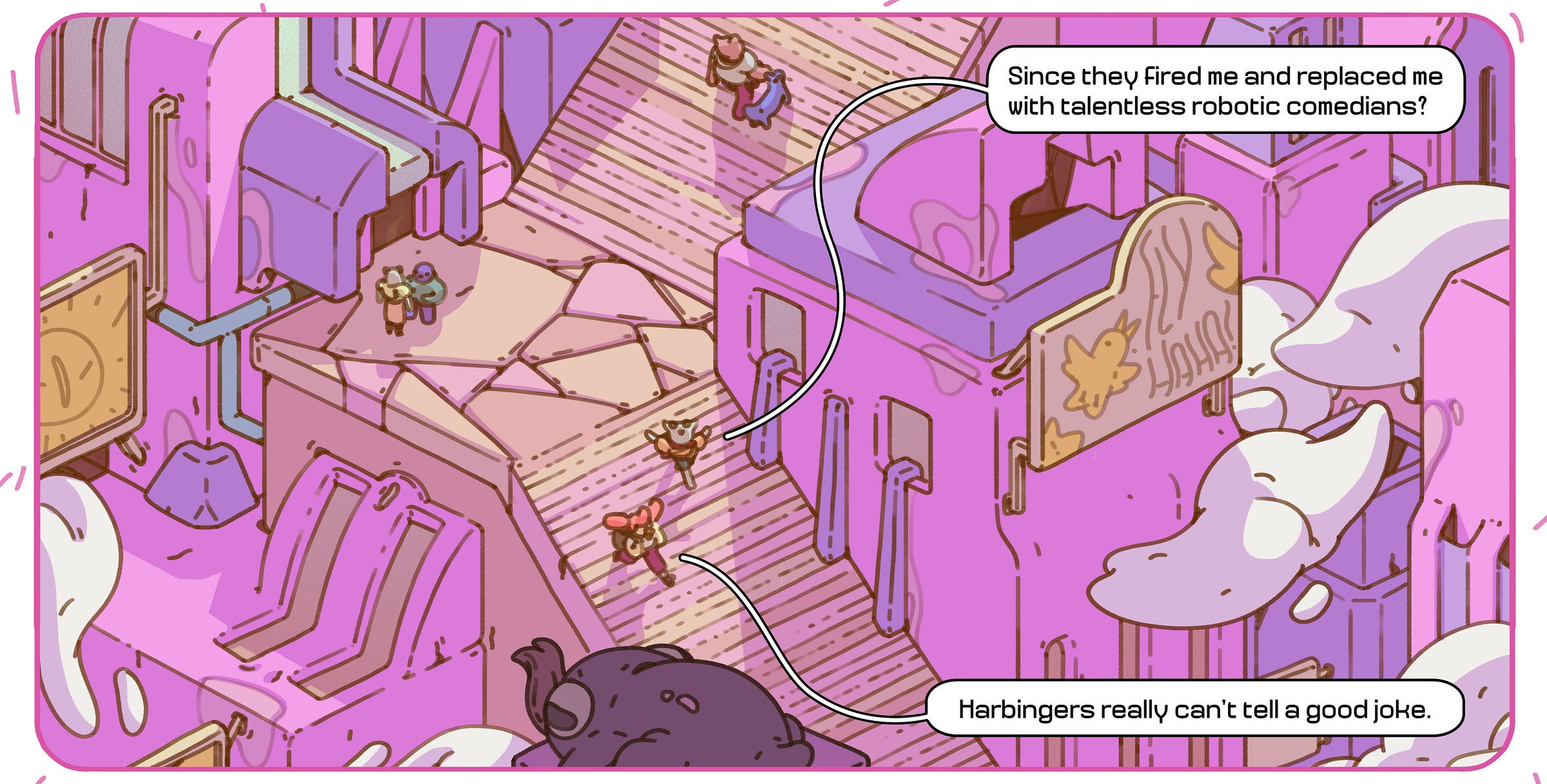
In Megalith, the graphic novel I’m developing with Lizz Lunney, I do something that may seem inefficient in terms of time. But I think it helps me achieve the visual quality I’m looking for in order to tell the story.
Intention in Storytelling_
For me, that means reading the script from Lizz and storyboarding on paper. In the same format I would do for animation in frames:
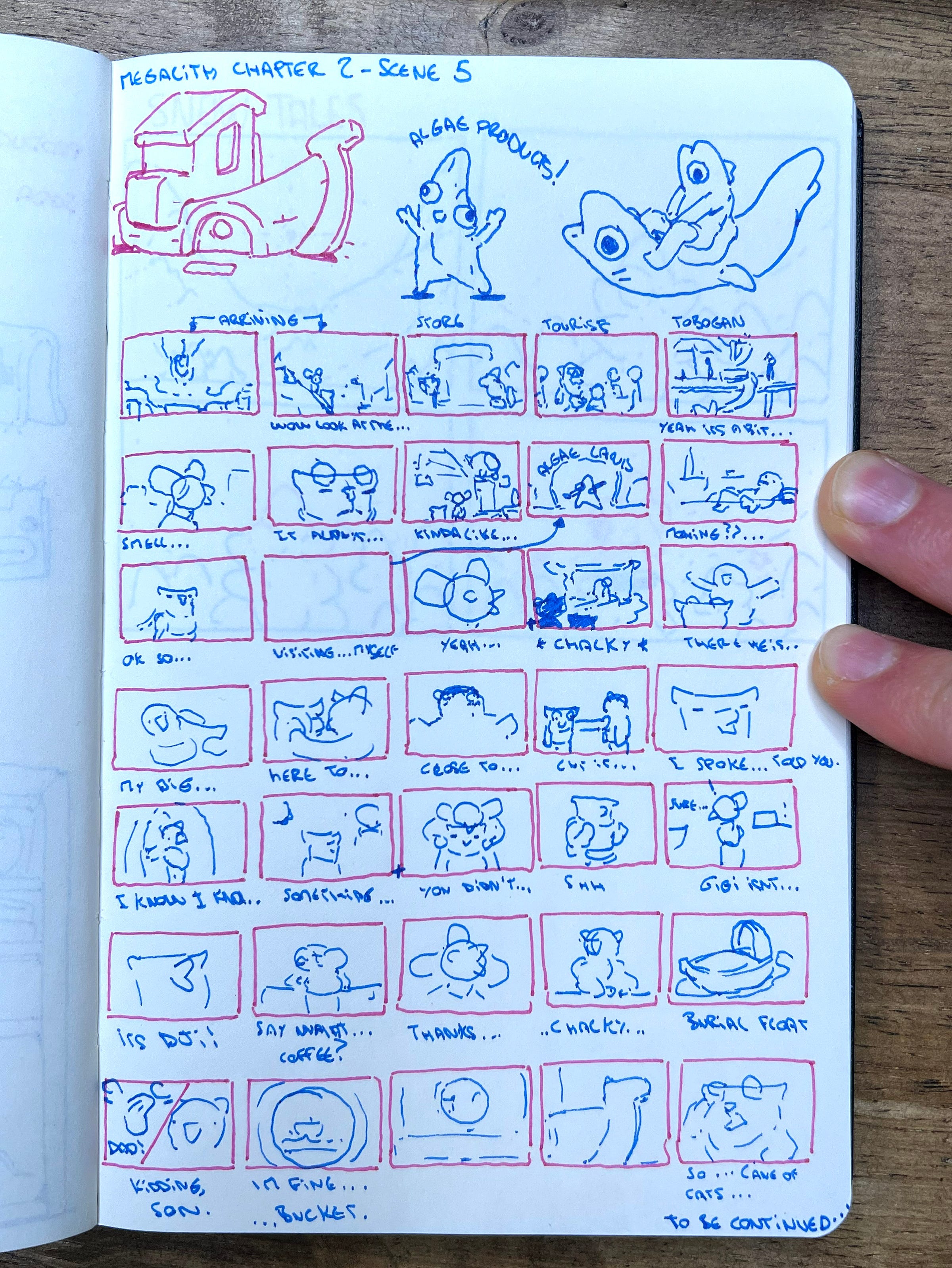
This part is the most creatively important to me because I think about the flow of how we are telling the scenes, the pacing, and the visual metaphors.
I’m not thinking on page layouts or panel shapes yet; it is purely cinematic thinking.
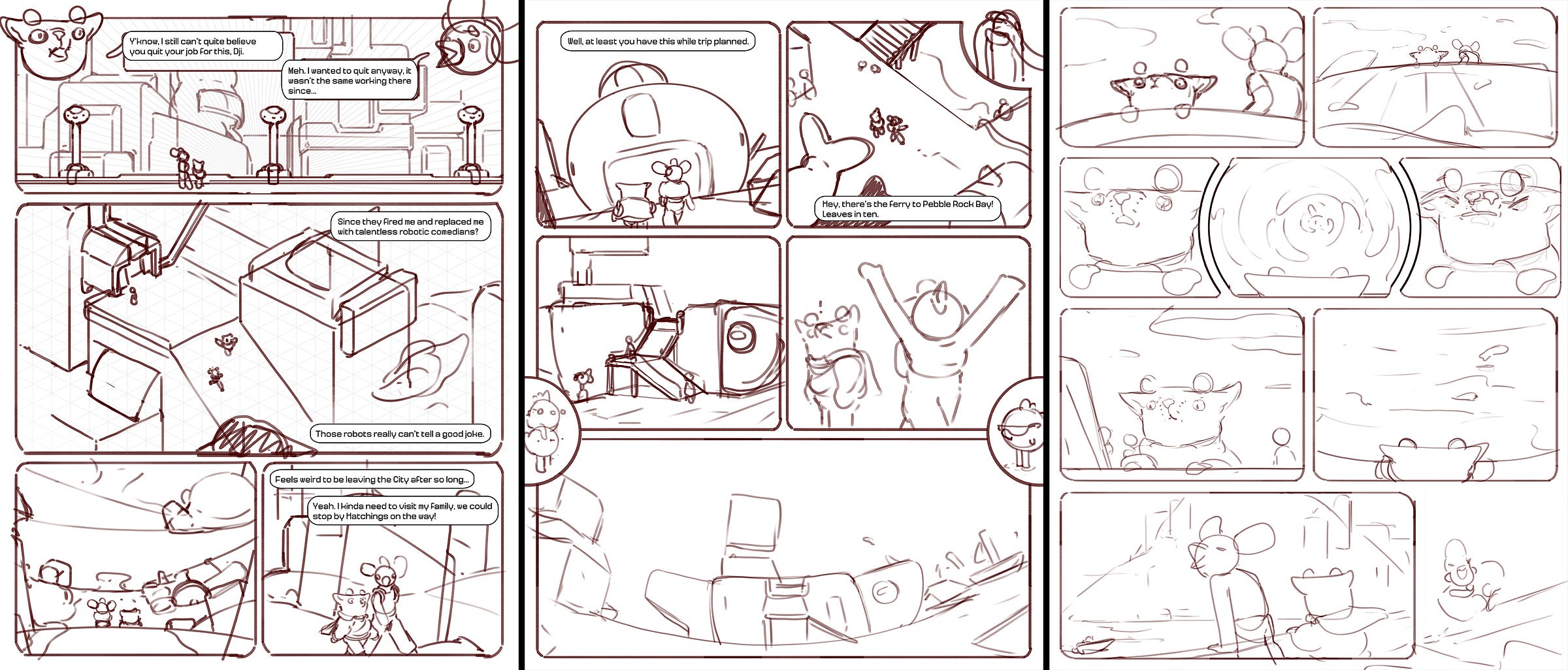
The next step is making the rough pages in Photoshop just because it is more flexible to me.
I take the script + storyboard, and I start thinking on the page layout, revisiting the pacing of the scene and making any changes or additions.
Problem Solving_
This process means I am practically drawing two storyboards.
This way, I separate the problem-solving into two steps:
Initial shots and visuals for the scenes.
Page composition.
It also gives me room to double-check things throughout this two step process.
After the roughs, I check with Lizz to see if she has any notes. Once that is done, cleaning up the lines means thinking purely about the design of all the elements, poses of the characters, perspective, etc.
Basically polishing the drawing.
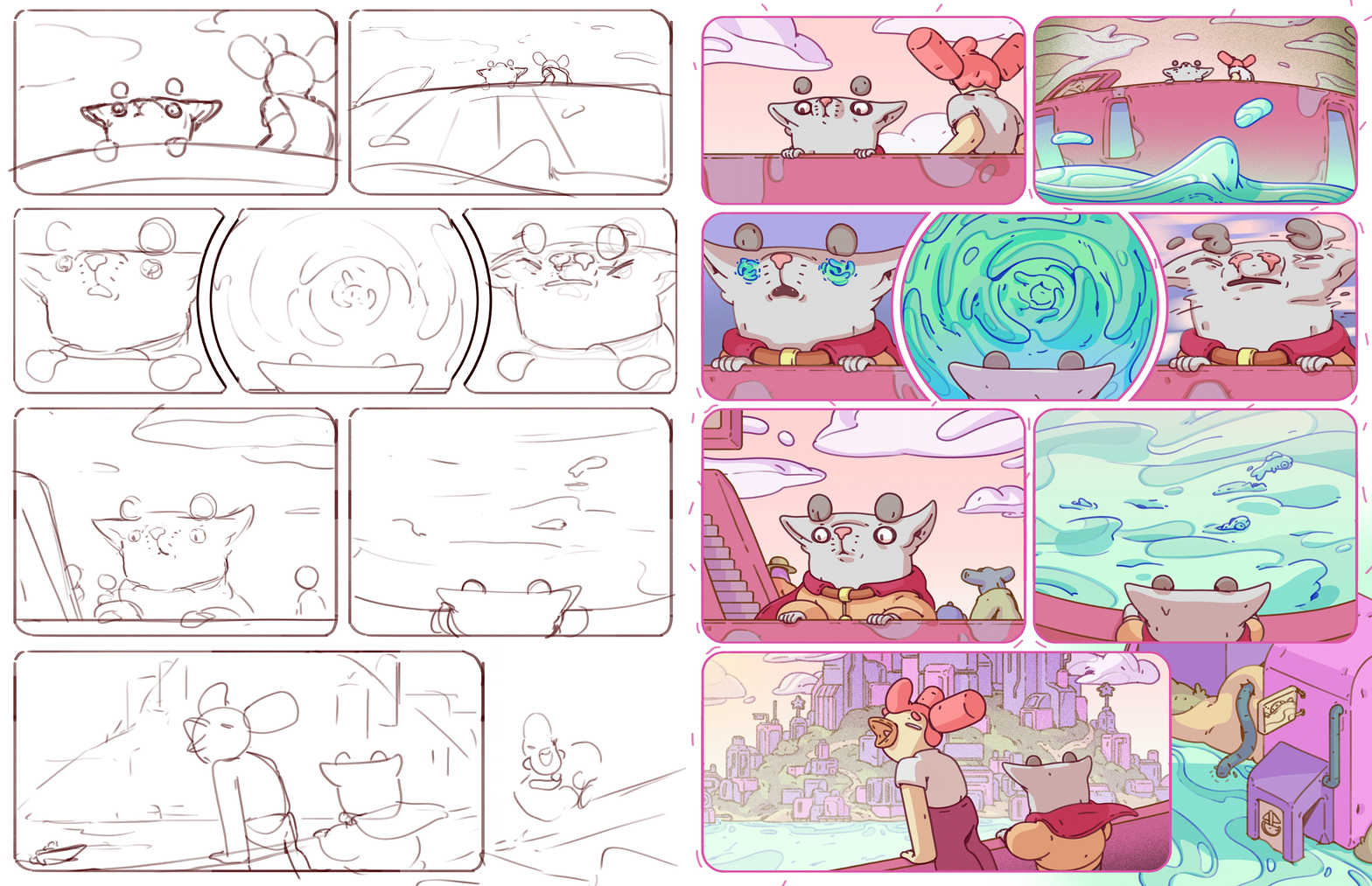
You can read Megalith pages and support us in Patreon!
Intention_
This entire process gives me intention. It gives me the space to take care of the different elements of every page, ensuring the visuals are tied closely to the script while expanding the story through the art.
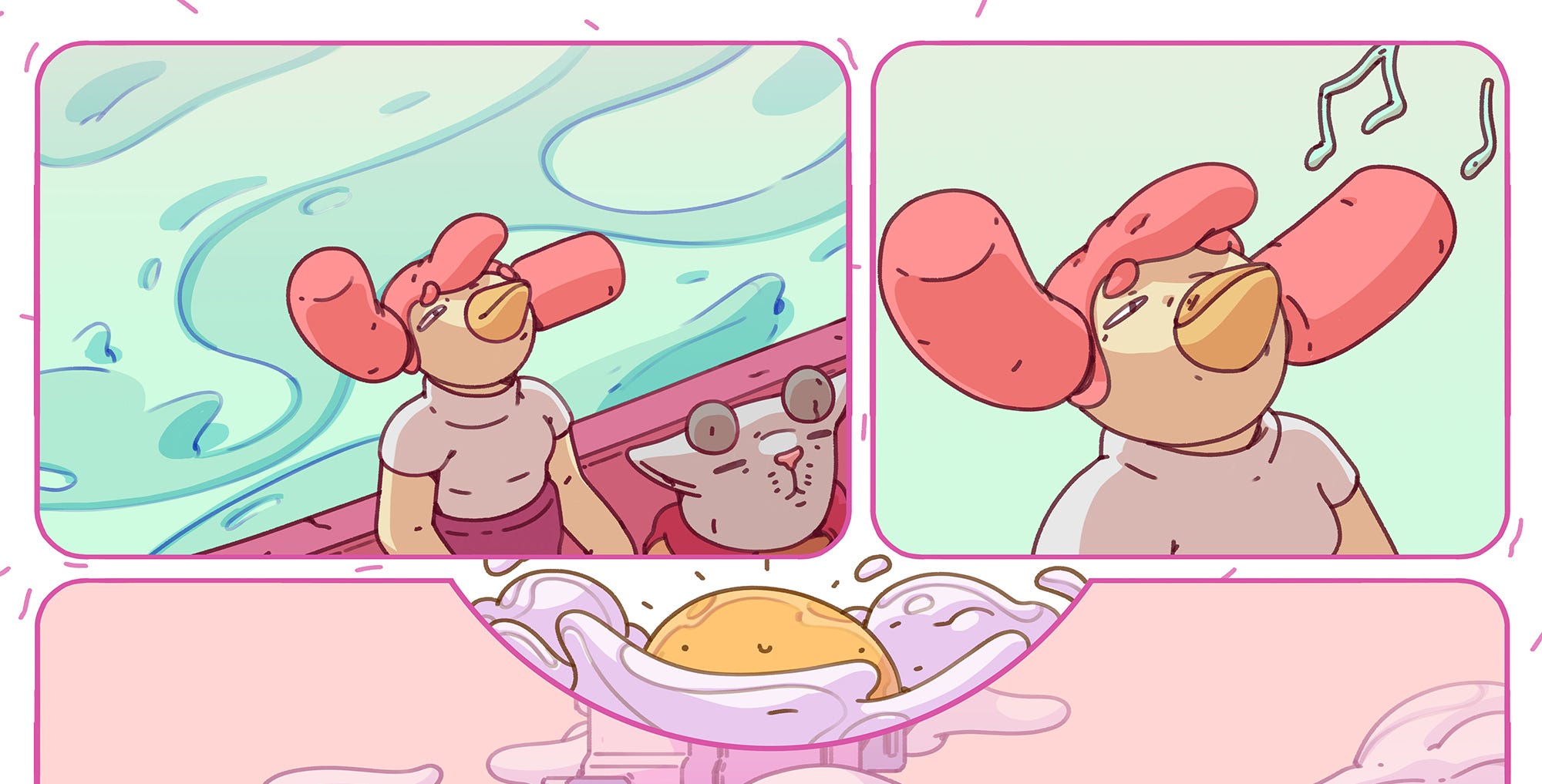
There’s no “wasted time” here. You just need care and intention in your process.
The goal is to tell you a story we believe in, not to achieve some metrics.
Stay creative, stay weird <3

Art Discipline is an independently-run newsletter. If you’ve enjoyed it, consider subscribing and sharing it with others.
Enjoying it? Get every issue by email.

Free monthly newsletter
Enjoyed this? Get the next one.
Art Discipline lands once a month. Free, honest, a little weird.
No spam, one email a month. Grab the free Photoshop Toolkit too.